Much Larger Selection Available in Store
Princess Cut Diamond Rings in Houston
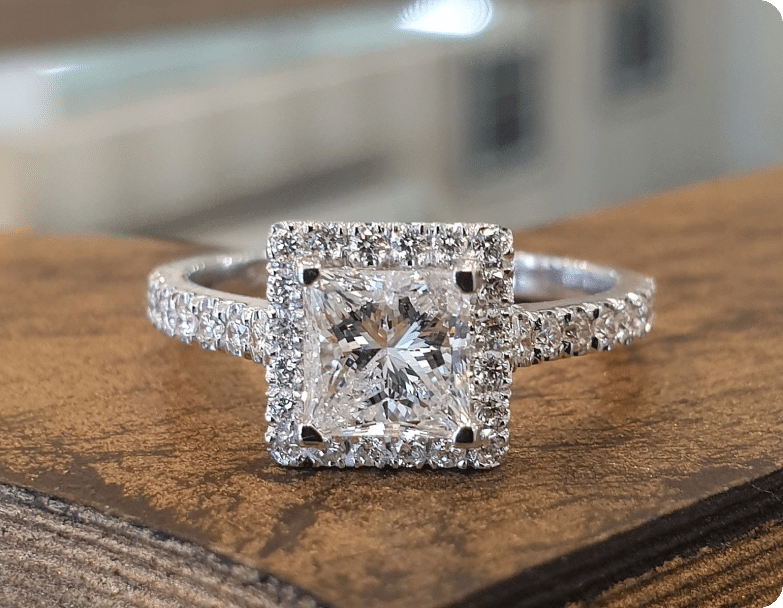
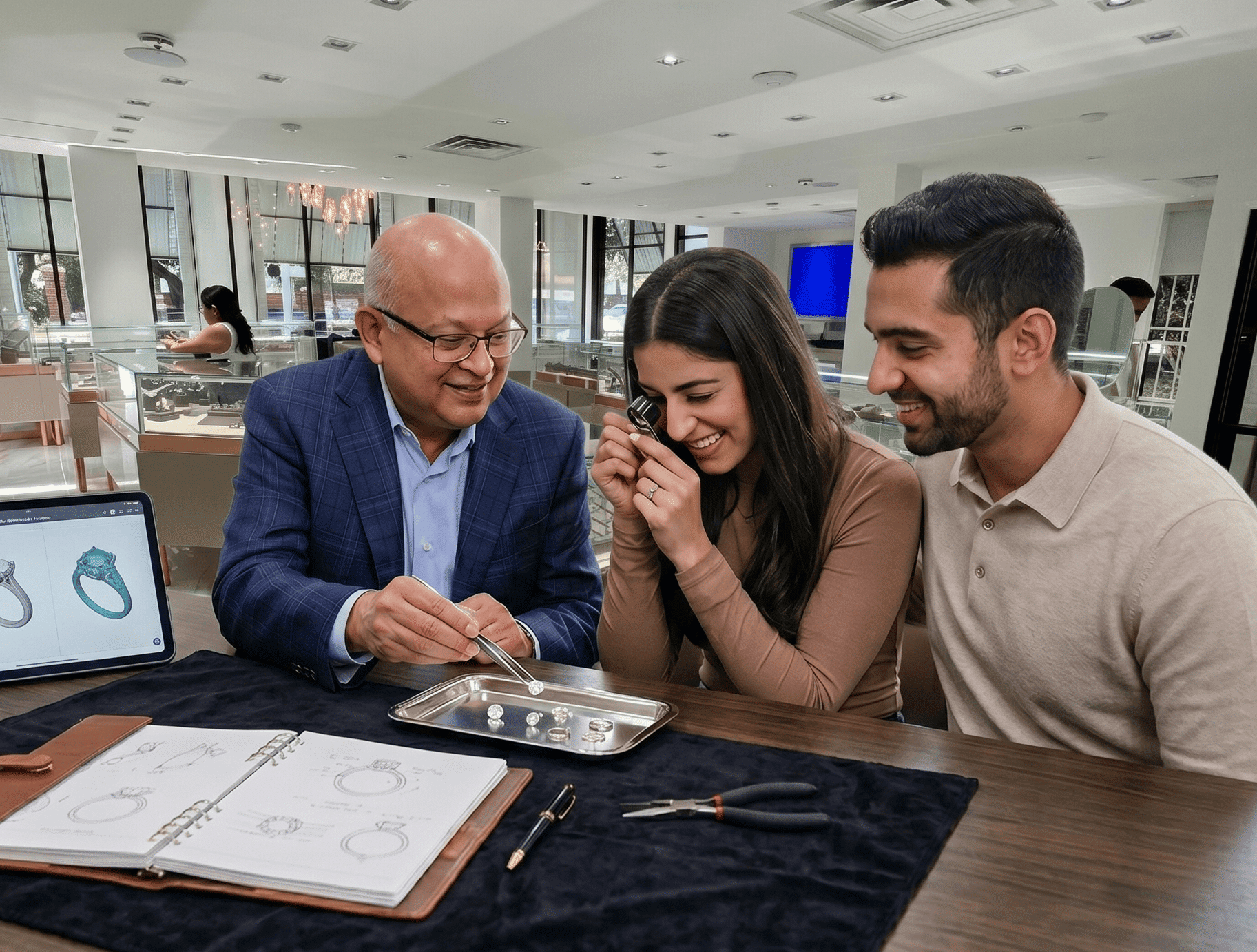
A princess cut is the sharp, modern alternative to a classic round brilliant: clean 90-degree corners, an intricate chevron facet pattern underneath, and a crisp, geometric flash of light. Nitish Sethi and our team have been hand-selecting and setting princess cuts for Houston couples since 1996, working out of our showroom at 2221 S. Voss Road. Couples drive in from Memorial, Tanglewood, River Oaks, and across the Galleria area because comparing cuts under true, natural light matters more than any photo online.
Here’s what you need to know about proportions, durability, and pricing before you choose your stone.
What a Princess Cut Actually Costs You
Ask around about whether a princess cut costs less than a round diamond of the same weight and you’ll get wildly different numbers. Published estimates swing anywhere from 10 to 40 percent less per carat. The range is real. How big it is depends entirely on the two specific stones you’re comparing. Here’s what’s true across the board: a princess cut keeps roughly three-quarters of the rough diamond crystal during cutting, where a round brilliant loses closer to half of it rounding off the corners. Less waste on the cutting wheel means more stone left to sell. That’s where the savings come from, not a discount, just less diamond thrown away. We’d rather set two comparable stones side by side in the showroom than hand you a published percentage that may not hold for your budget.
Carat Weight, and What You’ll Actually See on the Hand
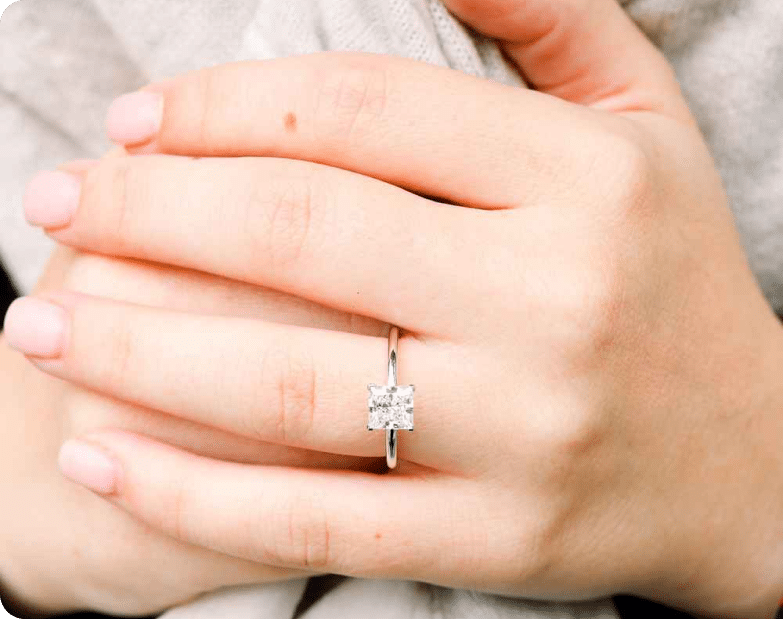
Here’s where princess cuts get confusing. You’ll read that they look bigger than a round of the same carat weight. You’ll also read that they look smaller. Both claims are out there. Both can be true. It comes down to how deep the stone is cut. A princess cut carries more of its weight down in the pavilion instead of spreading it across the top, so a stone cut too deep, past roughly 75 percent total depth, can look noticeably smaller face-up than the carat number suggests. Keep the depth in the 68 to 75 percent range and a well-cut princess reads close to its full size, sometimes larger, thanks to the diagonal lines that stretch the eye across the stone. That’s why we compare actual millimeter measurements against carat weight instead of quoting carat alone. Two 1.5-carat princess cuts can look meaningfully different sitting side by side, and the certificate tells you why before you ever try one on.
The Corners Are the Whole Game
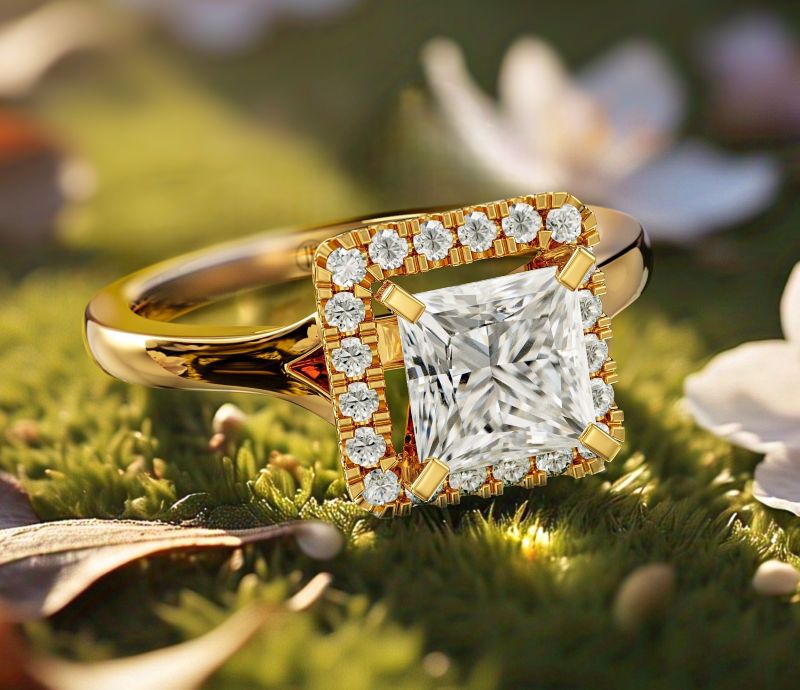
A princess cut has four sharp, 90-degree corners, and that’s also its one real weak point. Standard prongs built for a round stone’s rounded girdle don’t do much for a point, so the fix is a V-shaped prong, sometimes called a chevron prong, that wraps and cups each corner individually, or a bezel that covers the edge entirely. Our repair bench sees the pattern clearly: rings that come in with a chipped or worn corner are almost always older princess cuts set with flat prongs bent to fit, not true V-prongs. If your hands take a beating all day (nursing shifts, construction, the gym), we’ll usually steer you toward a bezel or a lower-profile setting instead of an open V-prong halo. It simply holds up better against daily bumps. Whatever setting you choose, have a specialist check the prongs on a princess cut about once a year. Sharp corners wear differently than a round stone’s edge, and catching a loose prong early is a five-minute fix instead of a lost stone.
Certification, and Where Nitish’s Eye Takes Over
Here’s a detail most buyers don’t know: GIA does not assign an overall cut grade to a princess cut. That’s true for every fancy shape except round brilliants. What you get on the report is polish and symmetry, not a single letter grade for how well the stone was proportioned. That’s exactly where an experienced eye matters more than the paper. Nitish and our diamond specialists check depth percentage, table size, and light leakage by hand on every princess cut we sell, the same proportions a cut grade would cover if one existed. On clarity, princess cuts hide small inclusions well because of the busy chevron pattern underneath, so a VS2 or SI1 stone confirmed eye-clean under the loupe is usually the smartest place to spend less and still get a diamond that reads clean on the hand. Color runs the other way. Color tends to pool slightly at the corners on a princess cut, so we typically recommend staying at H or better, especially set in white gold or platinum. Every princess cut we sell comes with GIA or IGI certification, and we’ll walk you through exactly what the numbers do and don’t tell you.
Pairing a Band and Choosing Settings
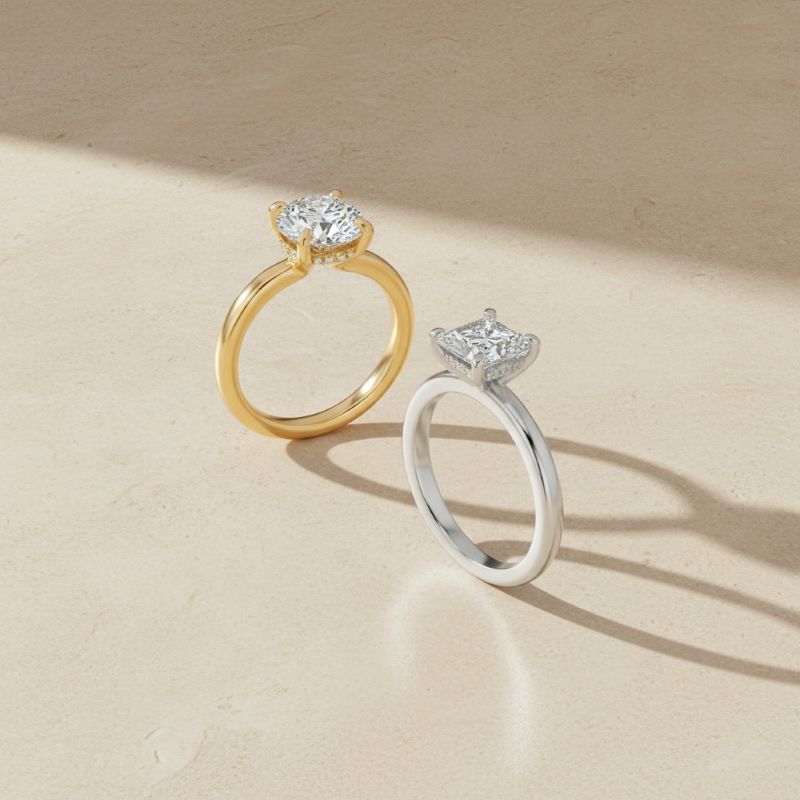
Because a princess cut has sharp, 90-degree corners, standard straight bands can leave an awkward gap against a cathedral setting. We carry and custom-contour designer mountings from Gabriel & Co. and Imagine Bridal, plus matching men’s bands from CrownRing, so the band sits flush against your stone’s geometry instead of guessing at the fit. If you’d rather add a splash of color or micro-pave accents, our ODELIA and Levant collections frame a square stone without hiding its clean lines. If you’re torn between a princess cut and a cushion cut for that square look, it comes down to sparkle. A princess throws sharp, geometric flashes of light. A cushion’s rounded corners give a softer, almost crushed-ice glow. Both are square. They read completely differently on the hand.
And if stretching your budget matters more than a natural stone specifically, ask to see the same princess cut lab-grown. The price gap between lab-grown and natural has widened a lot over the past few years. Current market pricing runs lab-grown roughly 70 to 90 percent below a comparable natural stone, not the 20 to 30 percent a lot of people still assume from a few years back. That difference usually buys a noticeably bigger, higher-grade stone for the same budget.
What Twenty-Five Years on This Floor Has Taught Us
On the question of whether princess cut is a style you’ll regret: we’ve had this shape on the showroom floor for close to thirty years, through the halo boom, the vintage revival, and back again. It has never actually left. It quiets down while another style gets the spotlight. Then a couple walks in wanting exactly that clean square look. If you love it, it isn’t a trend you’re borrowing.
Princess-Cut Settings We Offer
Every setting below can be built around a princess cut, but the shape changes how each one actually performs, not just how it looks.
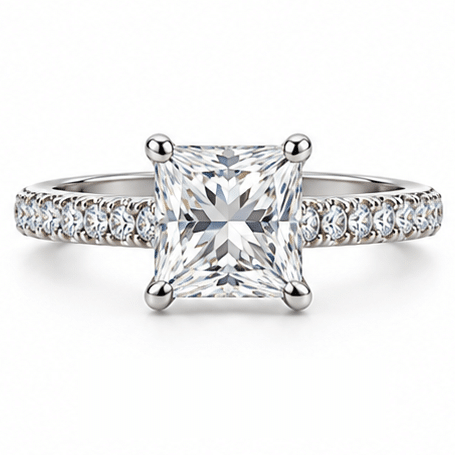
Solitaire
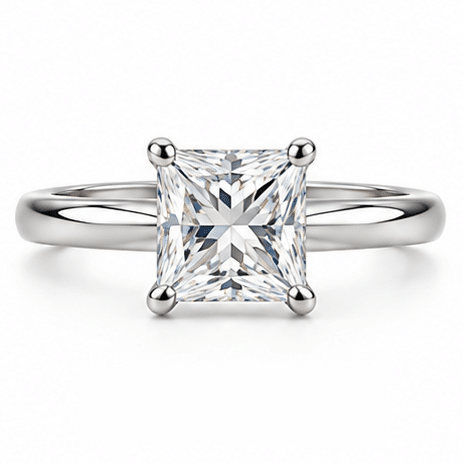
A single princess cut on a clean band puts all the attention on the stone’s corners and chevron sparkle. We always set a solitaire princess cut with true V-prongs, never flat prongs bent to fit.
Pave
A continuous line of small diamonds down the shank draws the eye toward the center stone. It can forgive a slightly smaller carat weight if you’re working within a budget.
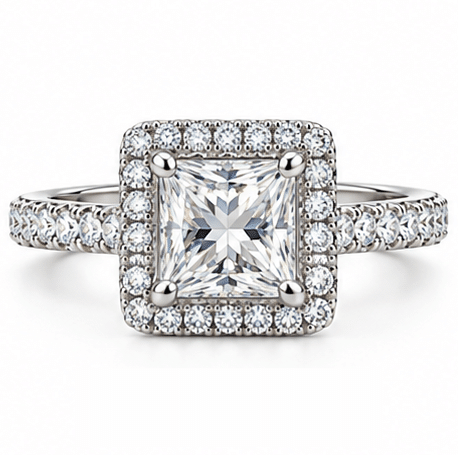
Halo
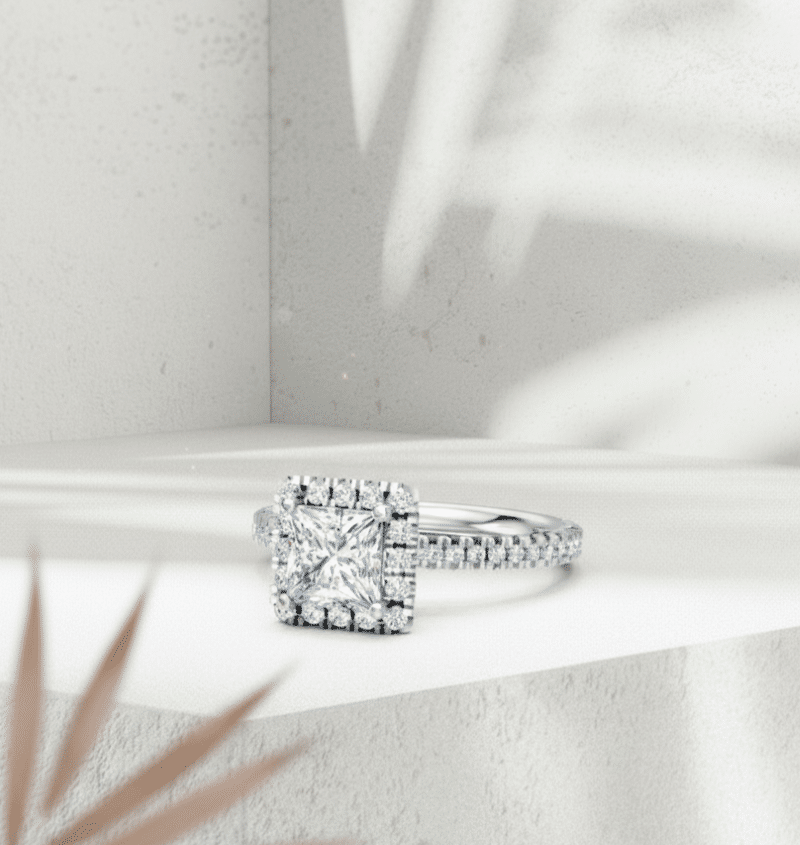
A ring of smaller diamonds around the princess cut adds visual size without adding carat weight. It also doubles as extra protection for the corners, since the halo itself acts like a low bezel.
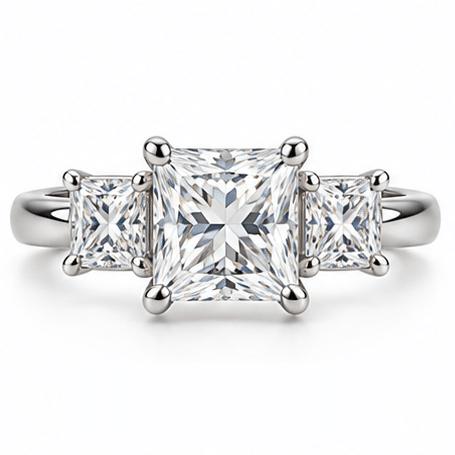
Three-stone
Two side stones flank the center to represent past, present, and future. We typically cut the side stones as trapezoids or baguettes so their lines match the center stone’s corners.
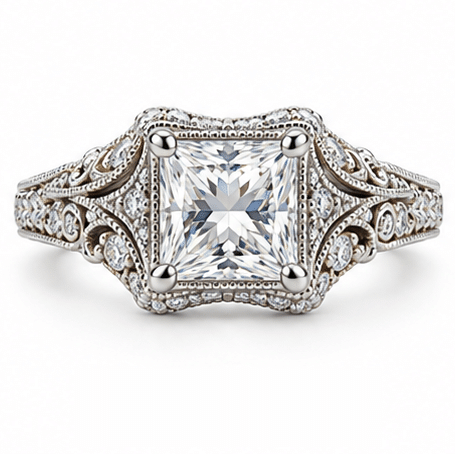
Vintage
Milgrain edging and filigree metalwork pair well with a princess cut, a shape with more history than most people know. English cutter Arpad Nagy patented an early square profile cut in 1961, and Israeli cutters Betzalel Ambar and Israel Itzkowitz refined it into the version sold today around 1979 and 1980.
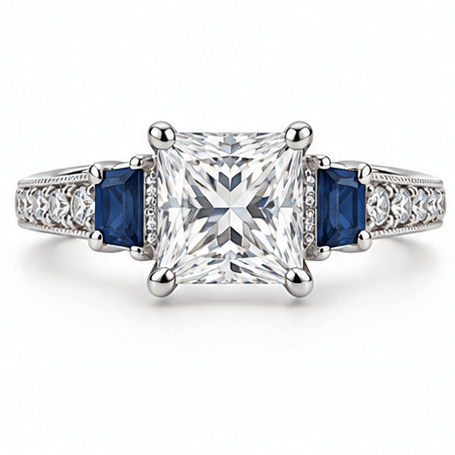
Gemstone accent
Sapphires, emeralds, or rubies set alongside a princess cut add color without competing with it. The stone’s geometric lines hold their own next to a rounded gemstone.
Princess Cut vs. Round Cut, Side by Side
If you’re choosing between shapes, here’s the comparison we actually walk customers through in the showroom.
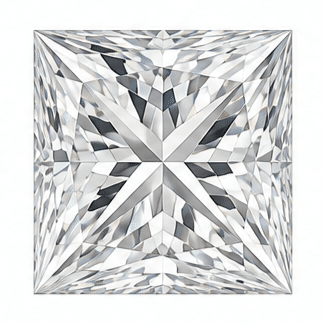 |
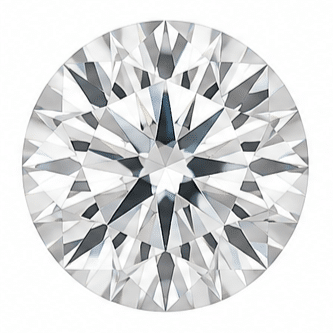 |
|
| Feature | Princess Cut | Round Brilliant |
| Rough Retained | Roughly 75%–80% (better carat yield) | Roughly 50% (higher cutting waste) |
| Price per Carat | Lower cost per carat | Higher premium |
| Face-Up Spread | Full-size at 68%–75% depth; shrinks if cut deep | Standard industry reference size |
| Durability Focus | 4 sharp corners require V-prongs or a bezel | Rounded edge; highly forgiving for daily wear |
| GIA Report Focus | Polish & Symmetry (no overall cut grade) | Formal Cut Grade (Excellent, Very Good, etc.) |
Neither shape is the right answer. It depends on what you’re set on: maximum size and value per carat, or a formally cut-graded shape for daily wear.
None of this replaces seeing the stones together. Come by our showroom at 2221 S. Voss Road, or book an appointment with Nitish and our team. We’ll set a princess cut next to a round, a cushion, whatever you’re weighing, and let you decide with your own eyes instead of a percentage on a page.

Amazing jewelry store that went out of their way to ensure I had the perfect custom engagement ring. Everyone was so helpful and guided us through the entire process. Would recommend over and over.
Nitish and his team are fantastic! After purchasing my wife’s engagement ring from him years ago, I have returned for many fine jewelry accessories for her in the years since. Sethi’s features a great selection of top brands and can custom design any piece you want. Very knowledgeble jewelry experts in the showroom, fair prices and outstanding client service. Most trustworthy jeweler in town.