Much Larger Selection Available in Store
Radiant-Cut
Diamond Rings
in Houston
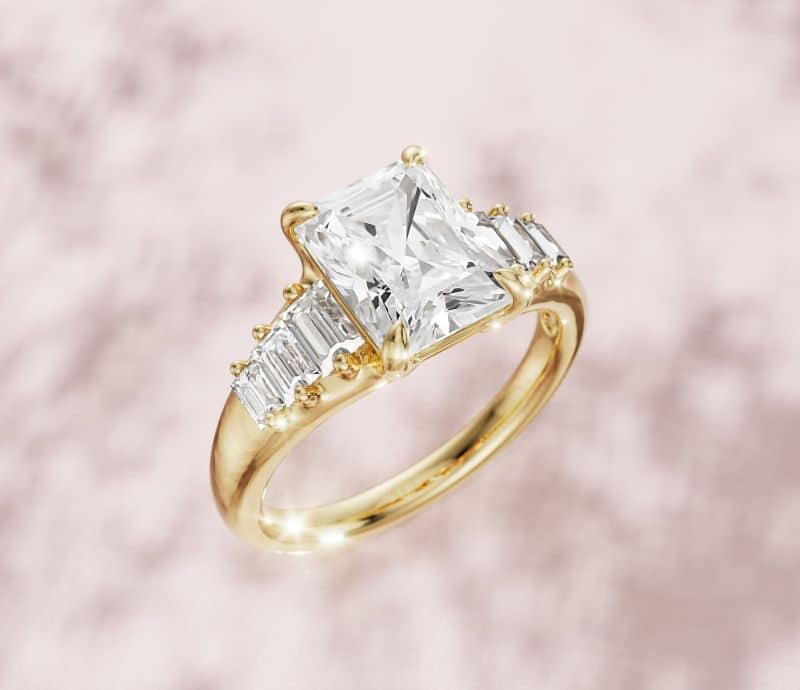
Radiant is the shape people ask for by name, then can’t quite explain why. Once you see one under real light, you get it: cropped corners, a rectangular or square outline, and a faceting pattern that throws light everywhere at once. Nitish Sethi has been hand-selecting radiant-cut diamonds for Houston clients since 1996, from the same showroom on Voss Road.
What a Radiant Cut Actually Is
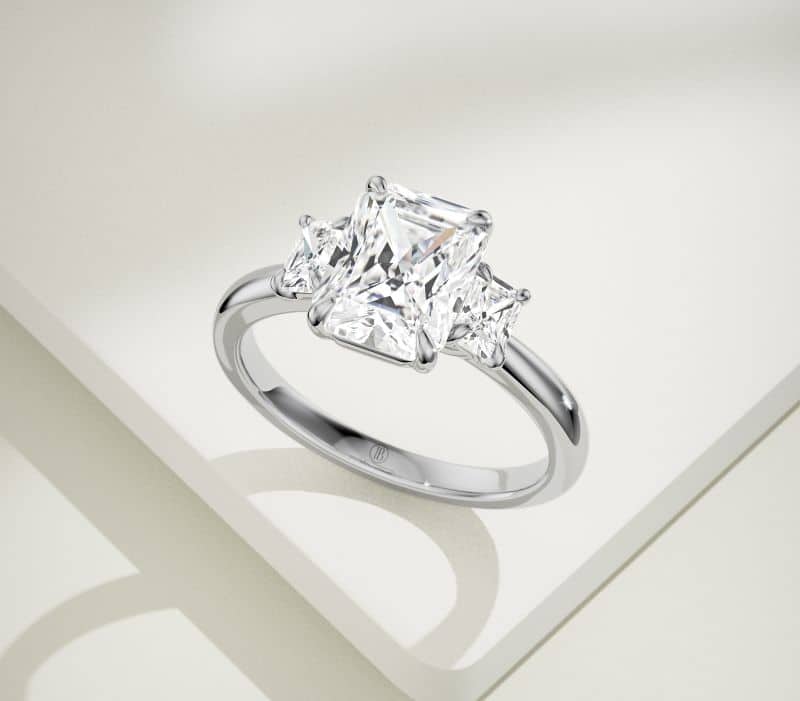
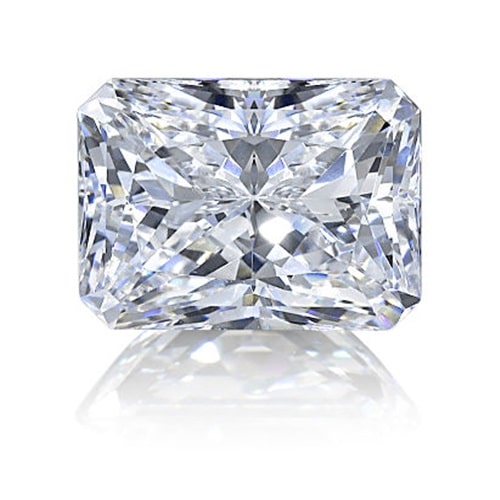
A radiant-cut diamond carries 70 facets across its crown and pavilion, well beyond a standard round brilliant. Those extra facets scatter light in more directions, which is what gives a radiant its kaleidoscope sparkle instead of the flatter shine of a step cut like an emerald.
Shape comes down to one number: length-to-width ratio. A square radiant runs about 1.00 to 1.05. A rectangular radiant runs anywhere from roughly 1.15 up past 1.50. Square reads compactand classic. A longer rectangle elongates the finger. Try both on before you decide. Most people have a clear favorite once they see the two side by side under the same light.
Why the Facets Matter for Your Budget
One question comes up in our showroom nearly every week: if a radiant hides inclusions, can you drop to a lower clarity grade and still walk away with a clean-looking stone? Often, yes. The busy faceting pattern breaks up light in a way that can camouflage small inclusions that would stand out plainly in a round or an emerald cut. Nitish looks at where an inclusion actually sits, and how it plays against the facet pattern, before he’ll call an SI2 a safe move on a given stone. Two diamonds with identical clarity grades on paper can look different once they’re in your hand under real light.
Color works the other way. Radiants, like most fancy shapes, actually hold onto body color more than a round brilliant does, thanks to their depth and facet arrangement. It’s part of why fancy colored diamonds are so often cut as radiants in the first place. Practically, we’ll usually steer you toward G color or better if you want a stone that reads icy white in platinum or white gold. In yellow or rose gold, an H or I still faces up beautifully, since the metal’s warmth does some of the work for you. Ask us to hold a G next to an I under your ring’s actual metal. The difference is obvious in about ten seconds.
That same faceting pattern splits radiants into two distinct looks. A brilliant-faceted radiant has pointed, angular facets that throw sharp flashes of white and colored light, the effect most people picture when they hear “sparkly diamond.” A crushed-ice radiant has a shattered, textured look: softer, more of a glitter spread across the whole stone, and it hides inclusions even better than the brilliant style does. Neither is a mistake. It comes down to what catches your eye, and it’s one more reason a product photo won’t tell you nearly as much as five minutes under our lights will.
Seeing It in Person, and Trusting the Cut
A poorly cut radiant, the kind jewelers call “leaky,” lets light escape out the bottom of the stone instead of bouncing back to your eye. It looks dull or dark in patches even with a good clarity and color grade on paper. A certificate alone won’t always warn you. Photos and videos sold online can flatter a mediocre stone, or undersell a great one. Nitish checks contrast pattern, bowtie effect, and depth by hand before a radiant ever goes into a setting we sell. We’d rather you see that difference yourself, under our lights, than take our word for it. Bring a printout, bring a link, bring nothing at all. Comparing two stones side by side in the showroom is still the fastest way to tell a great cut from an average one, and it’s the whole reason people drive across Houston instead of ordering sight unseen.
Finding the Right Fit
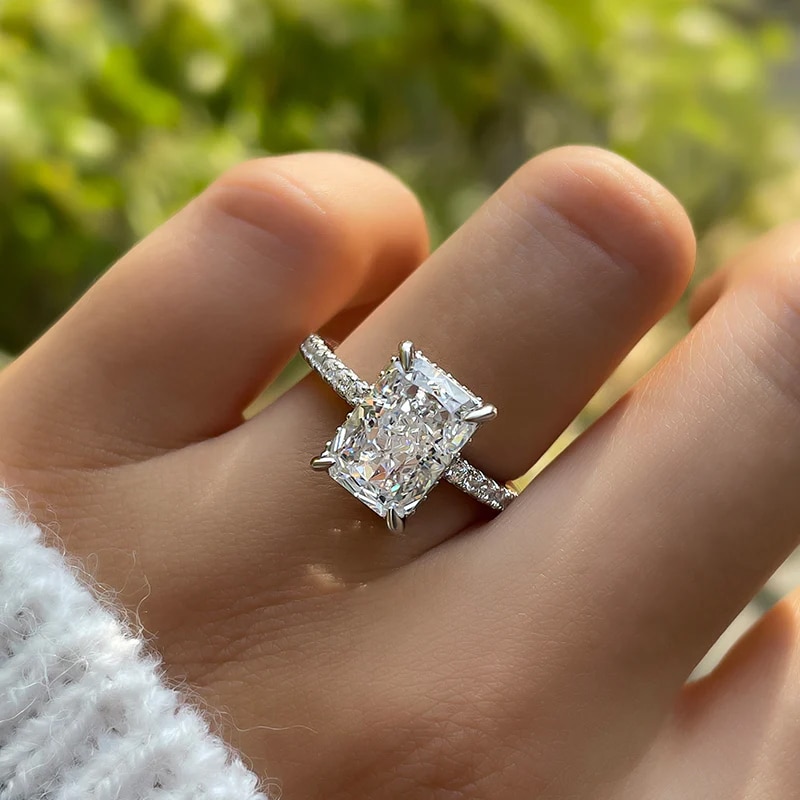
A larger radiant, in the 3 to 4 carat range, reads differently depending on hand size, but “too big” is rarely the real problem people run into. Radiant’s elongated shape tends to sit proportionally even on a smaller hand, since it draws the eye lengthwise down the finger, more forgiving than a round or cushion at the same carat weight. The surest way to know is to try one on. We keep loose stones on hand for exactly that.
Whichever size and grade you land on, you’ll also choose natural or lab-grown. Lab-grown radiants now run 70 to 85% less than a comparable natural stone: same hardness, same fire, same certification. That gap changes the math. It’s the difference between a 1.5 carat and a 3 carat radiant on the same budget, or between a plain band and one with pavé the whole way around. Plenty of our clients take the savings and go bigger. Just as many put it toward a mounting they’d otherwise have talked themselves out of.
Your Ring, Your Setting
Once the stone is settled, the setting is where the ring becomes yours. A solitaire keeps the radiant as the whole story. Pavé or a diamond halo adds sparkle around it. Whether you choose a hand-engraved vintage mounting from Imagine Bridal, an intricate architectural halo from Gabriel & Co., or a bold custom band from CrownRing, a radiant anchors modern and classic mountings equally well. Bring a picture if you have one, or let Nitish walk you through what’s worked for other radiants he’s set.
Sethi’s Fine Jewelry has been on Voss Road since 1996, and Nitish is still the one behind the counter helping you choose. Book a private appointment for one-on-one time with him, or set up a custom design consultation if you already know you want to build something from scratch. Walk-ins are always welcome, and there’s free parking right outside our door. No pressure, just a good look at the stone in real light.
Radiant Cut Against the Alternatives
Couples usually land on radiant after weighing it against something else. Here’s what actually holds up.
Round or Princess
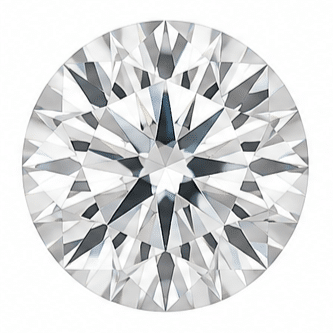
The price difference between radiant and round or princess cuts is real, but conditional. Radiant generally costs less per carat, mostly because more of the rough diamond survives the cutting process. That savings only holds if the cut quality is good, though. A radiant cut too shallow or too deep to perform well isn’t a bargain. It’s a dull stone at a discount. Ask what the savings actually buys before you buy on price alone.
Emerald
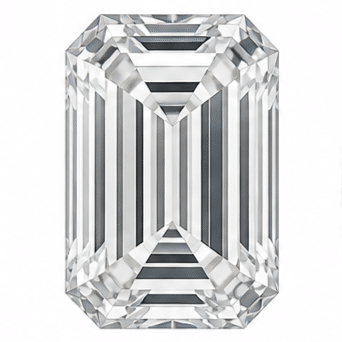
An emerald-cut stone is beautiful, but it’s a step cut, built to show off clarity and color rather than fire. We’ve had clients who chose emerald first come back saying it reads flat under office lighting. Love that elongated silhouette but worried about a stone that goes dull day to day? Radiant gives you a similar shape with real brilliance behind it.
Princess
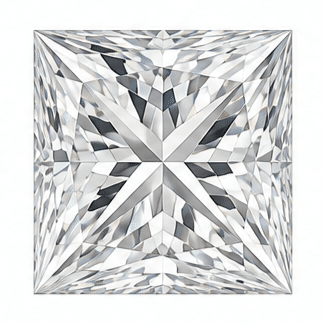
Durability is where princess loses. Its corners come to a sharp point, the single most vulnerable spot on any diamond, especially if you work with your hands or hit the gym often. Radiant trims those corners at 45 degrees instead, spreading out stress so they resist chipping. On our own repair bench, pointed corners come in for chip repair far more often than beveled ones. Want the geometric look without babying your ring? That’s your answer.

Amazing jewelry store that went out of their way to ensure I had the perfect custom engagement ring. Everyone was so helpful and guided us through the entire process. Would recommend over and over.
Nitish and his team are fantastic! After purchasing my wife’s engagement ring from him years ago, I have returned for many fine jewelry accessories for her in the years since. Sethi’s features a great selection of top brands and can custom design any piece you want. Very knowledgeble jewelry experts in the showroom, fair prices and outstanding client service. Most trustworthy jeweler in town.